How to Start a Blog in 2026: A Step-by-Step Guide for Beginners
If you’re wondering how to start a blog in 2026, I want to begin with something I wish someone had told me earlier: starting a blog is much easier than building one that people actually want to read.
I didn’t start SmileGrows because I had everything figured out. Quite the opposite.
I had ideas, questions, and a general feeling that I wanted to build something of my own. But once I actually started putting the website together, I discovered that “starting a blog” is not one task. It’s a series of small decisions.
What should I write about?
Which domain should I choose?
Do I need WordPress?
How much should I spend?
Which hosting company should I use?
What should I publish first?
And, eventually, can a blog actually make money?
This guide walks through the process I have been working through with SmileGrows. I’ll show you what I would focus on if I were starting from zero today, including the things I would not spend too much time worrying about.

1. Start With Why You Want a Blog
Before buying a domain or choosing a hosting plan, ask yourself a more important question: What do I want this blog to become?
A blog can be:
- A personal project
- A place to share expertise
- A source of side income
- A personal brand
- A lead-generation channel
- A platform for affiliate marketing
- A way to sell digital products
- The foundation of a small online business
Those goals can overlap, but knowing your direction helps you make better decisions later.
For SmileGrows, I didn’t want to create a website that simply published random articles about money. I wanted to build something useful around earning more, saving money, budgeting, and developing better financial habits.
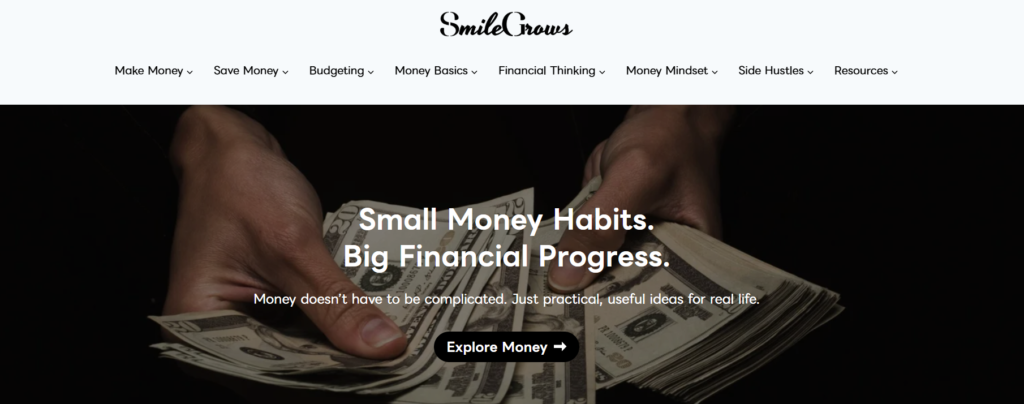
This is where the site landed after a few rounds of rethinking what I actually wanted it to be.
What I Actually Did: I started with a much vaguer idea than the site looks like now. I just knew I wanted to write about money in a practical way. The specific structure came later, after publishing enough to see what I actually enjoyed writing and what readers responded to.
That decision also helped me understand something important:
You don’t need to know exactly where your blog will be five years from now. You need enough direction to know what you’re building today.
If you’re still trying to figure out your topic, don’t rush this part.
[How to Choose a Blog Niche: A Practical Guide for Beginners]
2. Choose a Blog Niche
A niche doesn’t have to be the narrowest possible topic. Think about the intersection of what you know, what people need, what you can keep writing about, and what can eventually support a business.
For example, “money” is broad. But “simple money habits for people who want to improve their finances” gives you a much clearer audience and direction.
When choosing a niche, I would look at five things:
- Do I understand the subject?
- Do people actively search for information about it?
- Can I solve real problems for readers?
- Can I think of dozens of useful article ideas?
- Is there a realistic way to monetize the audience later?
Don’t choose a topic simply because somebody online said it is profitable. A profitable niche that you hate writing about can become a very expensive hobby.
3. Choose a Domain Name
Once you have a general direction, it’s time to choose your domain. This part can become surprisingly addictive, you check one name, then another, then another, and before you know it you’ve spent three days comparing word combinations. I wouldn’t do that.
Your domain should be:
- Easy to remember
- Easy to spell
- Reasonably short
- Relevant to your brand
- Flexible enough to grow with you
I also wouldn’t make your domain so narrow that you’re trapped by it later.

The domain I eventually settled on for SmileGrows, it took less time than I expected once I stopped overthinking it.
What I Actually Did: I spent far too long comparing names that all sounded fine, before realizing that “good enough and available today” beats “perfect but still unregistered next week.” The goal isn’t perfection. The goal is to choose something good enough and start building.
4. Choose Your Web Hosting
This is where your blog becomes an actual website.
For SmileGrows, I use Hostinger. I chose it because I wanted a relatively straightforward setup for WordPress without making the technical side of building a website more complicated than necessary.
If you’re a new blogger and want to use the same hosting provider I’m using, you can check Hostinger here. New customers can get 20% off eligible hosting purchases through my referral link.
Check Hostinger’s current plans and get 20% off
If you’re a beginner, hosting can feel confusing because there are dozens of companies and plans that all seem to promise similar things.
My advice is simple: Don’t choose hosting based only on the cheapest headline price.
Look at:
- WordPress compatibility
- Ease of setup
- Storage
- Performance
- Support
- Renewal pricing
- What is included in the specific plan
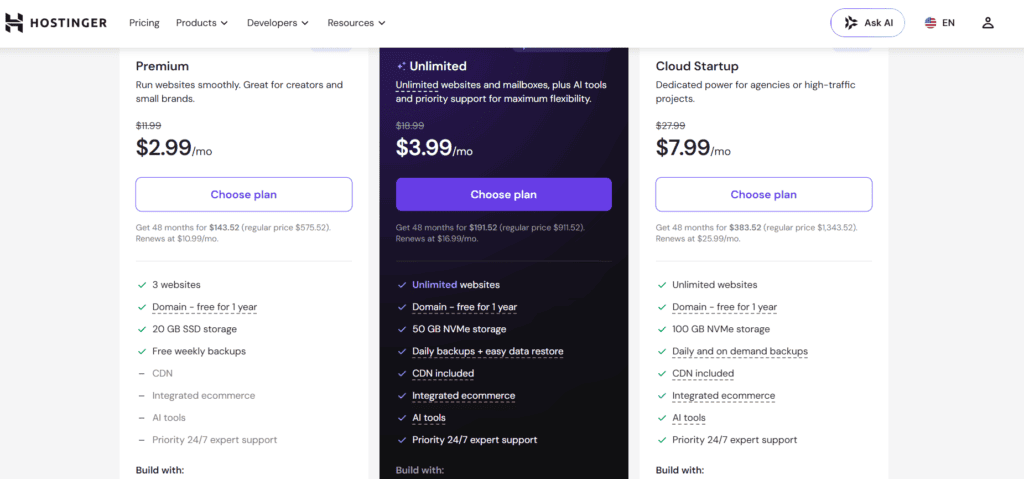
This is the plan comparison screen I was looking at when I made my decision.
I go into much more detail about my experience with Hostinger here:
[Hostinger Review for Beginners: Is It Worth It for Starting a Blog?]
And if you’re trying to work out your overall startup budget first:
[How Much Does It Cost to Start a Blog in 2026?]
5. Install WordPress
For a traditional content-focused blog, WordPress is still a very practical option.
Once your hosting is connected, you’ll need to install WordPress and access your dashboard.
Then you’ll start making decisions about:
- Your theme
- Site structure
- Categories
- Navigation
- Permalinks
- Plugins
- Homepage
- Blog layout
Here’s something I learned the hard way: You can spend an enormous amount of time designing a website before you have enough content to justify the design.
Don’t let that happen. Your website needs to be clear and trustworthy. It doesn’t need to be perfect.
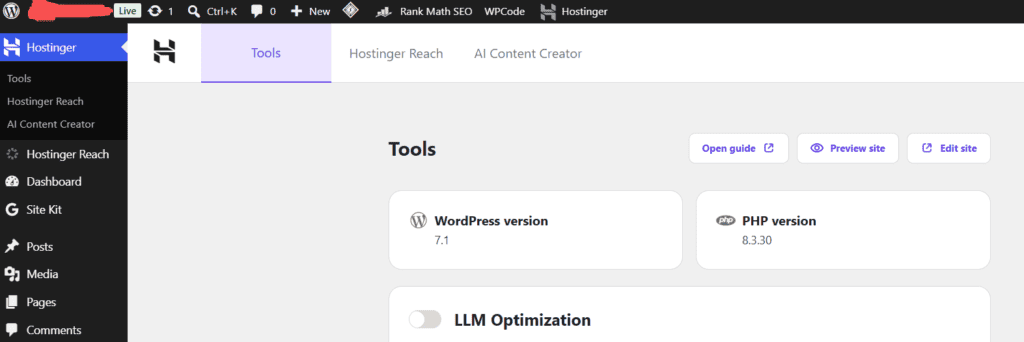
This was a lot less intimidating in practice than it looked before I actually did it.
6. Create Your Essential Pages
Before publishing lots of content, create the basic pages your readers will expect.
Depending on your website, these may include:
- About
- Contact
- Privacy Policy
- Terms of Use
- Disclaimer
- Affiliate Disclosure
For a money-focused website, transparency matters even more.
If you’re recommending products or earning affiliate commissions, readers should be able to understand that relationship.
7. Plan Your First Articles
This is where the blog starts becoming more than a website.
Don’t publish ten unrelated articles simply because you have ten ideas. Think in content clusters.
For example, on SmileGrows, I already have an Affiliate Marketing cluster covering beginner questions, affiliate platforms, products, tools, and specific programs.
[Affiliate Marketing for Beginners: How It Actually Works →]
For a new Blogging cluster, I would start with:
- How to Start a Blog
- How Much a Blog Costs
- How to Choose a Niche
- How to Do Keyword Research
- How to Get Your First Visitors
- How to Make Money Blogging
Now the articles support one another.
A reader who discovers one article has somewhere useful to go next.
8. Learn Basic SEO
You don’t need to become an SEO expert before publishing your first article.
Start with the fundamentals:
- Search intent
- Useful titles
- Clear headings
- Descriptive URLs
- Internal linking
- Helpful content
- Good page structure
- Original experience
One lesson I’ve learned while building SmileGrows is that SEO is not just about finding a keyword and repeating it.
You need to understand why someone searched in the first place.
[How to Do Keyword Research for a Blog: A Beginner-Friendly Guide]
9. Don’t Worry About Making Money Immediately
This is probably the hardest part for people who start a blog with income in mind.
You may see screenshots online showing people earning thousands of dollars from blogs.
What you don’t see is all the work that happened before those screenshots.
A new blog usually needs time to build: Content → Traffic → Trust → Audience → Monetization
Not: Website → Money
There is a big difference.
Eventually, a blog might earn through affiliate marketing, advertising, digital products, services, sponsored content, or other business models.
But you don’t need all of them on day one.
[How to Make Money Blogging: 7 Realistic Ways to Monetize a Blog]
10. What I’m Learning From Building SmileGrows
SmileGrows is still a work in progress. I’m still testing topics. I’m still improving old articles. I’m still learning which keywords are worth targeting. I’m still changing parts of the website. And I’m still figuring out which monetization methods make the most sense.
That’s actually one reason I wanted to write this guide. You don’t have to wait until you’ve “made it” before sharing what you’re learning. Sometimes the most useful advice comes from someone who is only a few steps ahead. If you’re starting from zero, my biggest advice is this: Don’t try to build the perfect blog. Build the first useful version.
Publish something. Learn from it. Improve it. Then publish the next thing.
That’s how a website slowly becomes an asset.
What I’d Do First
If I were starting a blog today, my first steps would be:
- Choose a clear audience.
- Decide what problem I want to help them solve.
- Choose a flexible domain.
- Set up WordPress and hosting.
- Create the essential pages.
- Plan a small content cluster.
- Publish useful articles.
- Learn from the first visitors.
- Improve what isn’t working.
- Think about monetization after I’ve created something worth monetizing.
You don’t need to know everything before you begin.
You just need a reason to begin, and the willingness to keep learning once you do.
Ready to Start?
If you’ve decided to start your blog and you’re looking for a beginner-friendly hosting option, Hostinger is the provider I’m currently using for SmileGrows.
New customers can get 20% off eligible hosting purchases when they sign up through my referral link.
Check Hostinger and get 20% off
If you’re not ready to choose your hosting yet, that’s completely fine. You can start by reading how much a blog actually costs…